 Active Compression
 Plain Compression Socks


Compression Socks & Stockings UK
Graduated compression socks and stockings for comfortable legs and better circulation, every day.

Best Sellers
View all-

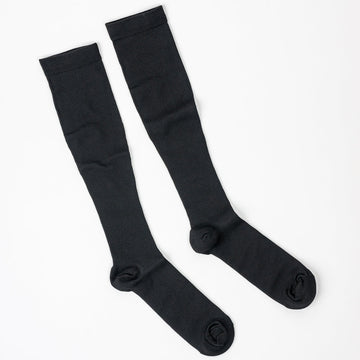 #1 Best Seller
Black Compression Socks
-29%Knee High#1 Best SellerBlack Compression Socks
-29%Regular price £19.00Regular priceUnit price per£27.00Sale price £19.00-29% -
Knee High
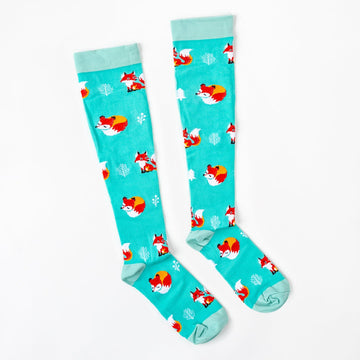
Sleepy Fox Compression Socks
-29%Regular price £19.00Regular priceUnit price per£27.00Sale price £19.00-29% -

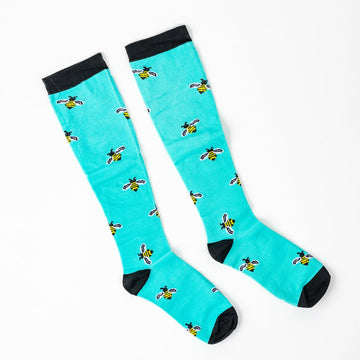 #2 Best Seller
Bee Party Compression Socks
-29%Knee High#2 Best SellerBee Party Compression Socks
-29%Regular price £19.00Regular priceUnit price per£27.00Sale price £19.00-29% -
Knee High
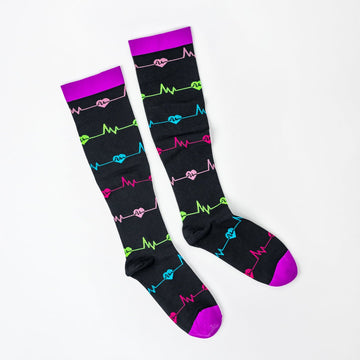
Pulse Compression Socks
-29%Regular price £19.00Regular priceUnit price per£27.00Sale price £19.00-29% -
Best Value
Buy 3 Pairs, Save up to 60%
Mix & match any knee-high compression socks. Free express shipping included on every bundle.
Shop Bundles -
Copper Infused
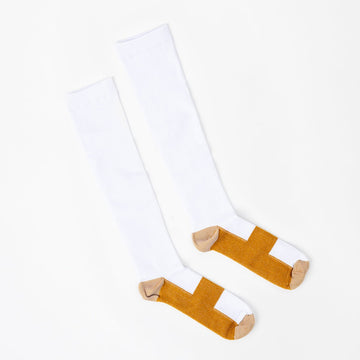
Copper Infused - White & Gold Compression Socks
-29%Regular price £19.00Regular priceUnit price per£27.00Sale price £19.00-29% -
Knee High
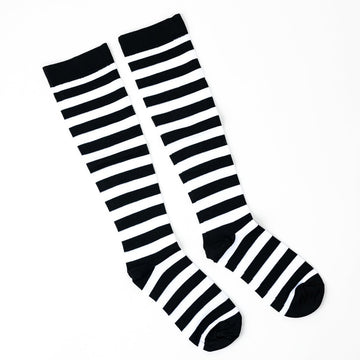
Black & White Striped Compression Socks
-29%Regular price £19.00Regular priceUnit price per£27.00Sale price £19.00-29% -
Knee High
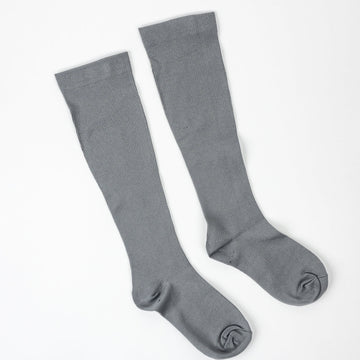
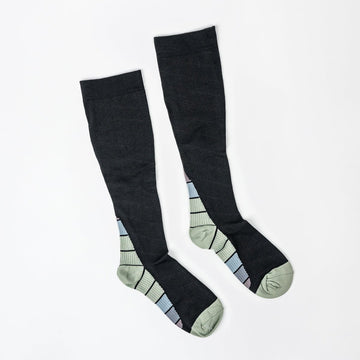
Grey Compression Socks
-29%Regular price £19.00Regular priceUnit price per£27.00Sale price £19.00-29% -
Knee High
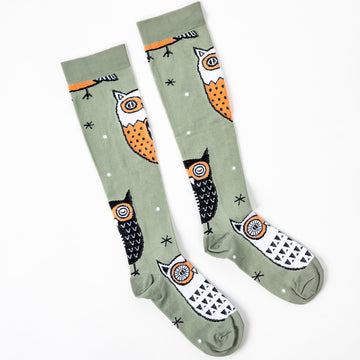
Cozy Owls Compression Socks
-29%Regular price £19.00Regular priceUnit price per£27.00Sale price £19.00-29% -
UK-Wide
Free Shipping over £30
Fast, tracked delivery straight to your door. Most orders arrive within a few business days.
Track Delivery -
Knee High
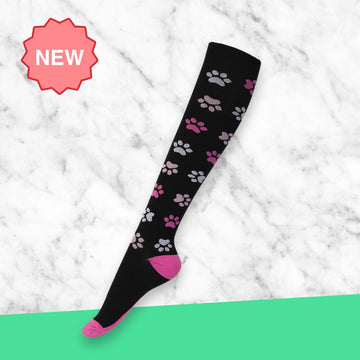
Pawesome Pink Compression Socks
-29%Regular price £19.00Regular priceUnit price per£27.00Sale price £19.00-29% -
Knee High
Retro Grey Compression Socks
-29%Regular price £19.00Regular priceUnit price per£27.00Sale price £19.00-29% -
Knee High
Cactus Compression Socks
-29%Regular price £19.00Regular priceUnit price per£27.00Sale price £19.00-29% -
Knee High
Pineapple Party Compression Socks
-29%Regular price £19.00Regular priceUnit price per£27.00Sale price £19.00-29% -
Risk-Free
30-Day Money-Back Guarantee
Try TheraWear compression socks for a full 30 days. Don’t love them? Return them for a full refund, unworn and in original condition.
Read the Promise -
Knee High
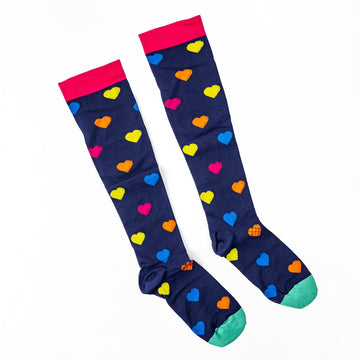
Navy Hearts Compression Socks
-29%Regular price £19.00Regular priceUnit price per£27.00Sale price £19.00-29% -

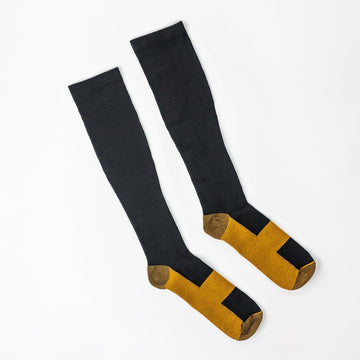 #3 Best Seller
Black & Gold Copper Infused Compression Socks
-29%Copper Infused#3 Best SellerBlack & Gold Copper Infused Compression Socks
-29%Regular price £19.00Regular priceUnit price per£27.00Sale price £19.00-29% -
Knee High
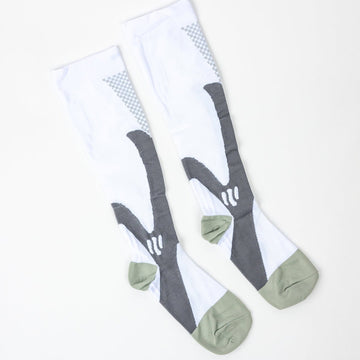
Active White Compression Socks
-29%Regular price £19.00Regular priceUnit price per£27.00Sale price £19.00-29% -
Knee High
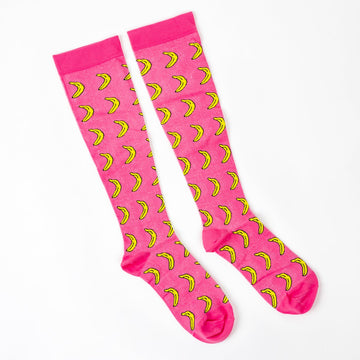
Pink Banana Compression Socks
-29%Regular price £19.00Regular priceUnit price per£27.00Sale price £19.00-29%


















Benefits of Compression Socks
Trusted by 50,000+ customers for everyday leg support
Improved Circulation
Boosts blood flow
Continuous Comfort
All-day wearability
DVT Prevention
Reduces clot risk
Vein Health Support
Prevents varicose
Boosted Performance
Enhances endurance
Lighter-Feeling Legs
May help ease everyday puffiness

How Graduated Compression Works
The knit is firmest at the ankle and loosens as it climbs, so the calf muscle can push blood back up rather than let it pool. It may help ease swelling and fatigue and lower thrombosis risk. Ward staff, commuters, runners and expectant mothers wear ours every day.
-
1
Put them on
They pull on like an ordinary sock; the graduated knit does the work from ankle to knee.
-
2
Wear them all day
Comfortable across a 12-hour shift, a long commute, a training session or a recovery day.
-
3
Feel the change
Less puffiness round the ankle, far less heaviness by evening. Usually obvious within a week.
Why Choose TheraWear
See how we compare on quality, support, and value.
Compression Socks and Compression Stockings: Where the Line Falls
British shoppers, and plenty of British clinicians, treat compression socks and compression stockings as one and the same. A handful of practical differences separate them, and they are worth understanding before you commit to a pair.
Compression Socks
Knee-length hosiery whose pressure is strongest at the ankle and eases as it climbs. The default option for anyone wanting circulation support through a commute, a shift or a flight.
- Sits just under the knee
- Generally 15–20mmHg, sometimes 20–30mmHg
- Built for commuting, standing work, sport, pregnancy
- Straightforward to put on, machine washable
- Available plain or patterned
Compression Stockings
Longer therapeutic hosiery running to the thigh or waist. In the UK the term usually signals something supplied for a diagnosed condition: varicose veins, lymphoedema, surgical recovery or chronic venous insufficiency.
- Knee, thigh and waist-height options
- Typically 20–30mmHg, occasionally 30–40mmHg
- Indicated for venous disease and rehabilitation
- Usually measured up by a healthcare professional
- Wear pattern directed by your clinician
Choosing Your mmHg: A Straightforward Guide
Compression is rated in mmHg — millimetres of mercury. Get the number right and the socks feel supportive all day; get it wrong and they simply feel restrictive.
Mild Support
Everyday relief for weary legs and the faint puffiness that shows up by evening. The natural place to begin if graduated hosiery is new to you.
Everyday ComfortModerate Support
Our best-selling strength in Britain. It copes with standing commutes, long-haul departures, pregnancy, retail and office hours, and holds early varicose changes at bay.
Travel & WorkFirm Compression
Full therapeutic pressure, the band associated with diagnosed varicose veins, oedema, thrombosis prevention, recovery after an operation and hard athletic training.
Medical / RecoveryExtra Firm
Kept for advanced venous disease, lymphoedema and post-thrombotic syndrome. Wear this band only where a GP or vascular consultant has directed it.
PrescriptionWhich People Benefit Most from Compression Socks?
TheraWear compression socks are worn daily by customers right across Britain. These are the groups who feel the change quickest.
Frequent Flyers
Cabin pressure, cramped seating and hours without movement swell the ankles and raise clot risk. Graduated socks are designed to help.
Nurses & NHS Staff
Twelve hours on a ward floor is punishing work. Compression keeps blood moving so the last hours are as bearable as the first.
Pregnancy & Postpartum
Maternity compression may help take the edge off the swelling, heaviness and night cramps that tend to arrive later in pregnancy and persist afterwards.
Runners & Athletes
More oxygen reaching working muscle during effort, less soreness in the days after. Compression tightens the turnaround between hard sessions.
Trades & Shift Workers
Scaffolding, warehouses, night shifts — work that keeps you upright and cold for hours is exactly what graduated compression was designed for.
Older Adults
Regular wear supports circulation and may help ease swelling and tired, heavy legs.
Office Workers
A day at a desk lets blood settle in the calves. Compression is why your legs are not aching by the time you leave.
Surgical Recovery
Therapeutic hosiery is standard practice after an operation, maintaining venous return through the weeks when you are moving less.
Teachers & Hospitality
Whole days spent upright in front of a class or behind a bar take a toll. A graduated knit is what gets you home comfortably.
Commuters
Standing on the Underground or sitting out a long rail journey both leave the calf muscle idle. Compression does the pumping instead.
Leg Conditions Compression Is Used For
Graduated compression carries clinical backing across a broad range of venous and lymphatic complaints, from mild cosmetic changes to established disease.
Varicose & Thread Veins
External pressure braces the vein and assists upward flow, which curbs how fast varicosities develop and relieves the heaviness that accompanies them.
Reducing DVT Risk
Stillness is the hazard, on a long flight or through weeks of convalescence alike. Compression keeps circulation active while you cannot.
Oedema & Ankle Swelling
Helping limit how much fluid gathers low in the leg makes compression a popular choice for ward staff, expectant mothers and anyone whose ankles disappear by teatime.
Chronic Venous Insufficiency
Compression hosiery worn daily is the recognised first-line management of CVI in the UK, supplying the valve support the veins have lost.
Lymphoedema
Alongside manual lymphatic drainage, compression garments are commonly used to help manage swelling in primary and secondary lymphoedema.
Restless Legs & Night Cramps
Customers write in about the same three things: deeper sleep, fewer cramps in the small hours, and less of that restless twitching once compression becomes routine.
Diabetic Foot & Leg Care
Gentle graduated pressure may support circulation in diabetic legs, though the strength should always be agreed with your GP or podiatrist first.
Shin Splints & Recovery
Less muscle oscillation under load means less damage to repair later, which is why club runners, cyclists and triathletes throughout Britain train in them.
Compression Socks, Delivered Throughout the UK
Dispatched quickly and tracked from end to end. Delivery is free once your basket clears £30.
Every UK postcode, fully tracked
We deliver compression socks and compression stockings to addresses across England, Scotland, Wales and Northern Ireland. Same therapeutic knit, same 30-day money-back guarantee, wherever the parcel lands.
Compression socks in London
There is no shop counter to queue at: TheraWear sells online, and orders to every London postcode are sent with tracking, usually arriving within 3–7 working days and free of charge over £30. Londoners tend to order compression socks for the same few reasons — a standing commute on the Underground, long shifts in the capital’s hospitals, marathon training, or a long-haul flight out of Heathrow or Gatwick.
Loved by Thousands of Customers
Based on 50,000+ happy customers
“You can feel the quality as soon as you put them on. Worth every cent.”
“Some compression socks can feel too warm, but these stay breathable all day long. I can comfortably wear them during work without feeling overheated.”
“Some compression socks make my legs feel too hot, but these stay breathable throughout the day. I can comfortably wear them for hours at work.”
“I wear these during long work shifts and they’ve really helped reduce leg fatigue by the end of the day. They stay comfortable for hours and don’t slide down constantly like other compres...”
“I ordered two pairs of nude size L/XL. I’m 80 kg with large calves and they fit perfectly. Fast shipping too. Well done!”
“I love the classic black and white style because it matches everything I wear to work. They’re comfortable enough for all-day use and really help with leg fatigue.”
“A lot of compression socks feel thick and hot, but these are surprisingly breathable. I wore them during a weekend trip with lots of walking and my legs felt great the whole time.”
“These are the perfect mix of cute and functional. feels supportive enough for long workdays while still being comfortable.”
“Love these new stockings. I love owls in the same way. As I love my Bee stockings too.”
“After standing all day at work my legs usually feel heavy and sore, but these have definitely helped. They stay up well and don’t roll down constantly.”
“I love that these don’t make my legs feel overheated like other compression socks I’ve tried. They’re lightweight, breathable, and still provide great support.”
“The socks themselves are fantastic and very comfortable, but the tracking updates were slower than expected which made me a bit nervous waiting for the parcel.”
Since October 2026, customers who review on our site can earn TheraWear Rewards points, whatever star rating they give.

Our FAQ
Compression Socks FAQ
They apply pressure that is deliberately uneven — firmest at the ankle, easing off as it climbs toward the knee. That gradient narrows the vein slightly and helps the calf muscle push blood back up rather than allowing it to pool. Many wearers find it supports circulation and helps their legs feel less puffy and achy by the end of the day. Every TheraWear pair is knitted at 15–20 mmHg in a breathable, moisture-wicking nylon, polyester and spandex knit.
Ward staff and carers working twelve-hour shifts, commuters standing on the Underground, expectant mothers coping with swelling, long-haul passengers out of Heathrow and Manchester, runners and cyclists recovering between sessions, trades working outdoors in the cold, office workers stuck at a desk, and anyone managing varicose veins, thrombosis risk or recovery after surgery. Heavy, tired or swollen legs are the common thread.
Everything we sell is knitted at 15–20 mmHg, which is the level that suits the greatest number of people: daily wear, travel, pregnancy, sport and milder clinical needs. It supports circulation and may help ease swelling and lower clot risk on long journeys, all without a prescription. For anything more established, ask your GP whether 20–30 mmHg or 30–40 mmHg would be more appropriate.
You need two figures: your calf at its widest, and your ankle at its narrowest point just above the bone. Check both against the size chart on the product page. The fit should feel snug and supportive, never painful — an accurate fit is what makes the graduated pressure work as intended. If you fall between sizes, go up rather than down.
They share the same graduated-pressure principle and differ mainly in length. Socks finish below the knee; stockings extend to the thigh or waist and generally arrive by way of a diagnosis. For commuting, standing work, sport and pregnancy, knee-highs cover it. TheraWear focuses on that length because it is easier to get on and considerably more comfortable to wear all day.
Very much so. Sitting still for hours is one of the clearest cases for graduated compression: it keeps blood moving while your calf muscles are inactive, which may help ease ankle swelling and lower the risk of deep vein thrombosis. Pull them on before you get to the gate rather than once you are seated, and keep them on until you land.
They are, and they are widely recommended — particularly from the second trimester onward, when swelling, thread veins and aching legs tend to become more noticeable. The 15–20 mmHg strength we use is appropriate for wearing every day. As with anything during pregnancy, check with your midwife or GP if you have specific concerns.
With regular wear and sensible care, expect 3–6 months before the graduated pressure begins to fade. Wash cold on a gentle cycle and dry them on a line or airer — tumble drying is what shortens their life, as the heat degrades the elastic fibres. When the ankle starts to feel slack, it is time for a new pair.
Yes — to every postcode in England, Scotland, Wales and Northern Ireland, with tracking included as standard. Orders over £30 are delivered free, and quicker options can be selected at checkout.
You can. Unworn pairs go back within 30 days of delivery for a full refund. Landing on the right size and strength sometimes takes two attempts, and that should not cost you anything — full details of how to arrange it are on our returns page.
Online, delivered to your door. TheraWear does not run a shop counter, so orders to every London postcode are sent with tracking and usually arrive within 3–7 working days, with free delivery on orders over £30. If the pair is for a flight or a race, order at least a week ahead.
Standard tracked delivery usually takes 3–7 working days to UK addresses and is free on orders over £30. Faster services, where they are available for your postcode, are shown at checkout.
The UK Guide to Compression Socks & Compression Stockings
Why UK customers choose TheraWear compression socks
Chronic venous problems affect a striking share of British adults, and the modern working day does them no favours — long commutes sitting still, hospital and hospitality shifts spent entirely upright, and desk work in between. Compression socks remain one of the most evidence-backed things you can do for your legs without a prescription, and TheraWear delivers true graduated compression at an honest regular price instead of a high-street pharmacy markup.
The mechanism is mechanical, not magical. Pressure is knitted highest at the ankle and tapers toward the knee, which narrows the vein slightly and helps the calf muscle push deoxygenated blood flow back up rather than letting it settle. In practice, many wearers notice less ankle puffiness, fewer night cramps, and legs that are not aching by the last hour of a shift.
Compression socks vs compression stockings: the terminology
In the UK the two terms are used almost interchangeably, including by clinicians. Where it matters, compression socks describes an everyday knee-high, whereas compression stockings often refers to the thigh-length or full-length hosiery supplied for a diagnosed condition such as chronic venous insufficiency. TheraWear specialises in knee-highs, which cover the great majority of day-to-day requirements.
On the high street and online you will also see them sold as flight socks, travel socks, support socks or support stockings. The labels overlap: flight socks and travel socks are graduated compression socks marketed for flying, while support socks and support stockings usually describe the lighter end of the same idea. What separates one pair from another is the pressure rating in mmHg and the length, not the name on the packet.
Choosing the right compression level (mmHg)
Strength is expressed in mmHg. For a first pair, 15–20mmHg is the sensible starting point: firm enough to make a noticeable difference on a long day, comfortable enough to wear from morning to night. Step up to 20–30mmHg for diagnosed varicose veins, post-surgical recovery, lymphoedema management or serious endurance training. Prescription-strength 30–40mmHg should always be fitted under the guidance of a GP or vascular consultant.
Compression socks for British working days
Twelve-hour shifts on a hospital ward, a standing commute on the Underground, long-haul departures from Heathrow, trades spent on scaffolding in the cold, and retirees keeping varicose veins in check — the demands differ, the graduated compression does not. Sizes run S through 6XL so the fit is right whatever your calf measures.
Choose plain black crew socks that pass unnoticed under work trousers, or patterned pairs with a bit more personality. Whichever you pick, the compression profile and the price are the same — there is no premium for the therapeutic knit.
Delivery across the UK
We deliver to every UK postcode with full tracking. Orders over £30 are shipped free.
A 30-day guarantee, no argument
Unworn pairs can be returned within 30 days of delivery for a full refund. Getting the compression level right sometimes takes a second attempt, and you should not be out of pocket for that.


